


April WORKSHOP - Nervous System Regulation Through Movement
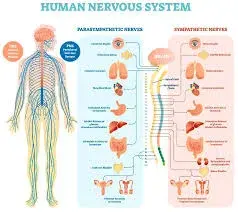
Why Your Nervous System May Be Driving Your Tightness
If you constantly feel tight — even when you stretch regularly — the root issue may not be tissue length. It may be your nervous system. Mobility is not purely mechanical. It is neurological. When the nervous system perceives stress (physical, emotional, or environmental), it increases resting muscle tone as a protective strategy.
This protective tension can show up as:
• Tight hips and shoulders
• Shallow breathing
• Difficulty relaxing into stretches
• Chronic neck or low back stiffness
• Slower recovery after workouts
In other words, your body may not feel safe enough to let go.
The Stress–Tension Loop
When stress levels remain elevated, the sympathetic nervous system (fight-or-flight) dominates. This increases muscle guarding and reduces variability in movement.
Over time, this can lead to:
• Reduced joint range of motion
• Increased compression through joints
• Persistent low-grade discomfort
• Decreased movement efficiency
Stretching in this state often feels frustrating. You may force range, but the nervous system quickly tightens again to maintain perceived stability.
The solution is not more intensity, it's regulation.
How Movement Regulates the Nervous System
The body interprets slow, controlled movement as safety.
In this workshop, we use:
• Slow eccentric loading
• Controlled articular rotations
• Long-exhale breath work
• Isometric holds at end range
These strategies stimulate mechanoreceptors within fascia and joints that communicate safety signals to the brain. As vagal tone improves and the system downshifts toward parasympathetic dominance (rest-and-recover), resting tissue tone decreases. Mobility improves because the body allows it — not because it was forced.
Breath and Pressure Systems
The diaphragm plays a critical role in nervous system regulation.
Shallow chest breathing reinforces stress physiology. Coordinated diaphragmatic breathing improves:
• Core pressure regulation
• Pelvic floor coordination
• Spinal stability
• Lymphatic flow
• Nervous system balance
By integrating breath with controlled load, we retrain the body to move from a regulated state. This changes how mobility feels. It becomes stable. Supported. Sustainable.
What You’ll Learn
In this workshop, you will:
• Understand the link between stress and tissue tone
• Improve mobility without forcing range
• Learn breath strategies for regulation
• Reduce chronic guarding patterns
• Enhance recovery between workouts
This is not relaxation in the traditional sense.
It is resilience training for your nervous system.
Nervous System Regulation Through Movement
Saturday, April 18, at Eagle Yoga House, 2:00-4:00 PM, $45.00


Comments